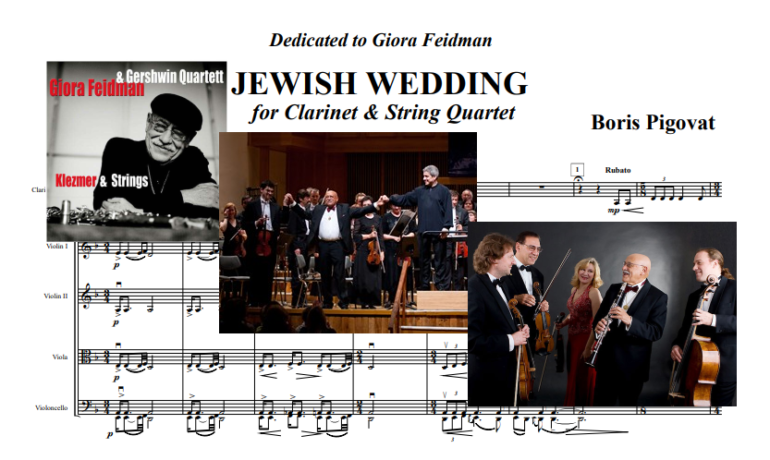
In 2001 I met Giora Feidman, a world-wide famous clarinetist and performer of klezmer music. He gave me a couple of his CDs. I was so impressed by his performance, that I decided to write a piece in klezmer style, a kind of klezmer rhapsody, and to dedicate it to him.
As a composer-in-residence at the Petach-Tikva Conservatoire, I was committed to write a piece for trombone and wind orchestra. I decided to write this piece as a klezmer rhapsody and to name it Tzfat (Safed), the name of a city where klezmer music festivals take place yearly. Tzfat for trombone and wind orchestra was written and performed in 2002 (see recording, below).
In 2004 I prepared a version of Tzfat for violin and string orchestra, which was also performed (see recording, below).
In 2008 I met Giora Feidman again, and he listened to Tzfat. He loved the composition, and he asked me for two additional versions of it: one for clarinet and string orchestra and another for clarinet and string quartet. He also suggested to rename the piece to Jewish Wedding, arguing that, outside of Israel, people are unfamiliar with Tzfat.
The version for clarinet and string orchestra was performed by Giora with a string group of the Jerusalem Symphony Orchestra (see recording below). The version with string quartet was performed the with Gershwin Quartet more than 30 times – in Germany, Austria, Holland, Switzerland, Russia and Ukraine. See below for a YouTube video from a performance in the Berliner Philharmonie concert hall.
Later, at the request of other performers, I prepared additional versions of this Jewish Wedding / Tzfat:
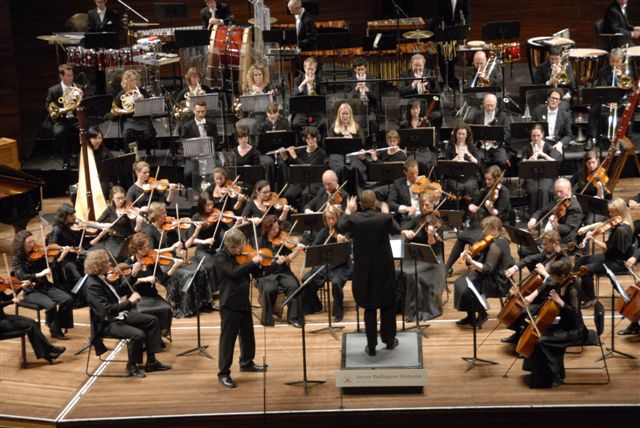
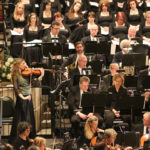
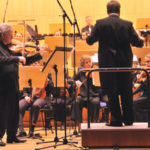
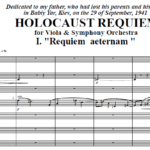
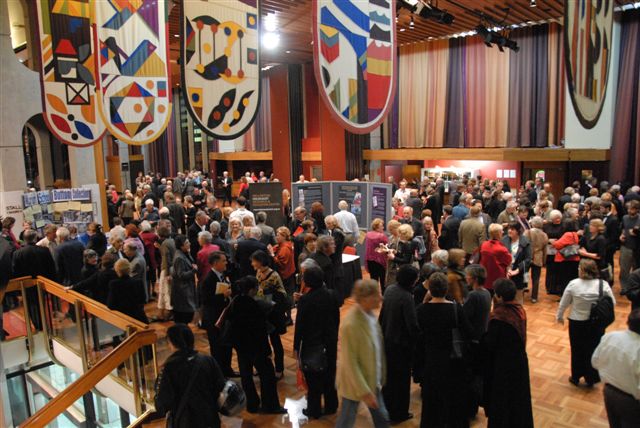
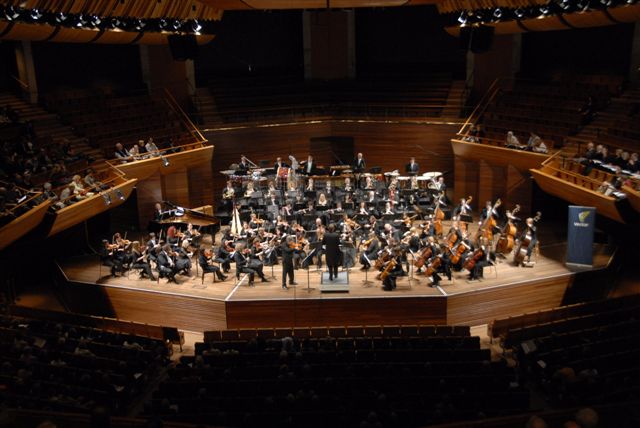
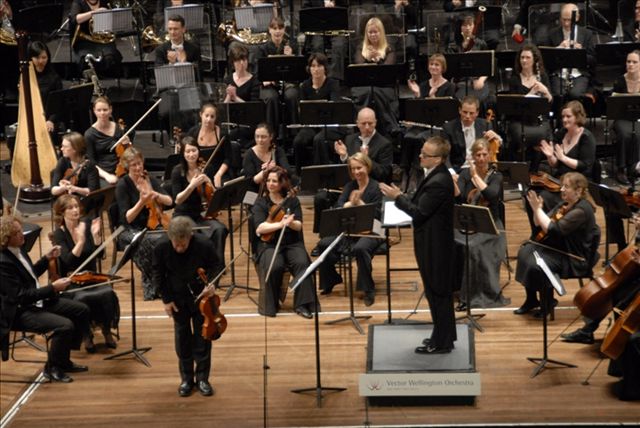
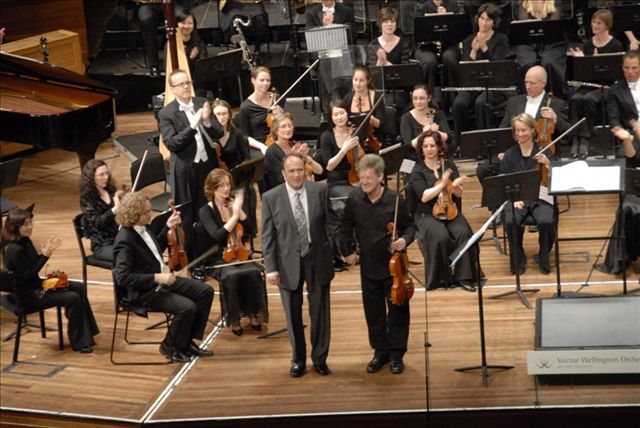
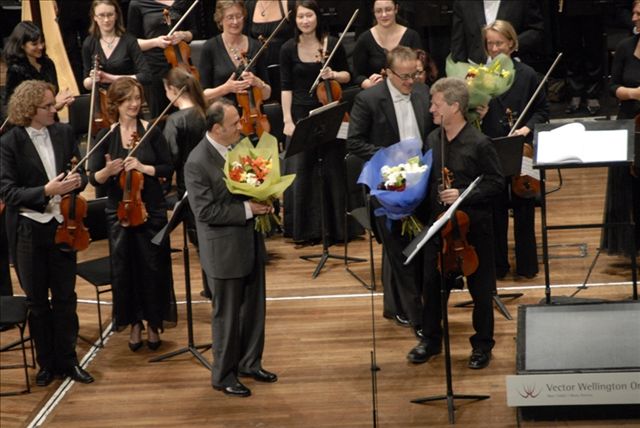
Holocaust Requiem was performed for it’s second time at the Concert of Remembrance for the 70th Anniversary of Kristallnacht. The outstanding performance by violist Dr. Donald Maurice, Professor of Music at the New Zealand School of Music in Wellington, conductor Mark Taddei, and Vector Wellington Orchestra, was widely reviewed by local and international media.
The performance was in 2008 but is indelibly etched into my memory. Many people were in tears. I myself said, ‘I must not cry!’” Commenting on the composition’s future and potential for effecting change, he observed, “It needs to be performed often as a reminder of the effects of war and the circumstances that precipitate one culture wanting to dominate or annihilate another.
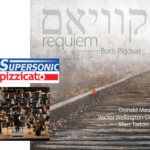
A live recording of Requiem from the event was released by Atoll, in November 2010, with other pieces of mine.
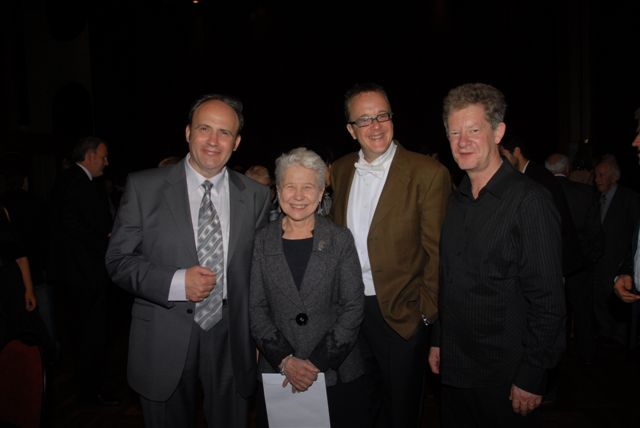
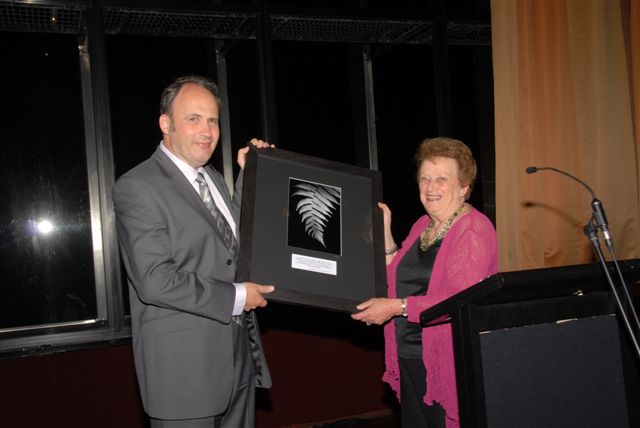
Boris Pigovat, Christine Pearce (General Manager of Vector Wellington Orchestra), Marc Taddei and Donald Maurice (#7)
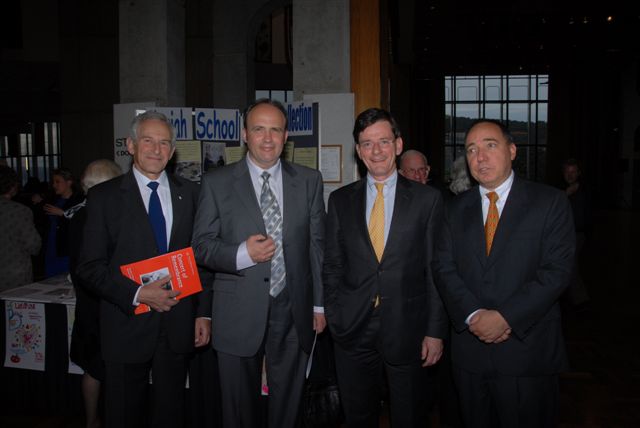
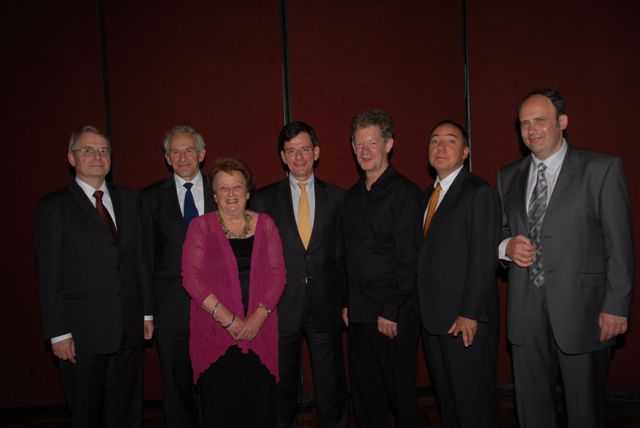
left-to-right: Jorg Zimmerman (Ambassador of Germany to New Zealand), David Zwartz (Chairperson of Wellington Regional Jewish Council), Inge Woolf (Director of Wellington Holocaust Research and Education Centre), Christopher Finlayson (Minister for Arts, Culture and Heritage), Donald Maurice, Yuval Rotem (Ambassador of Israel to Australia and New Zealand), Boris Pigovat
with Inge Woolf (Director of Wellington Holocaust Research and Education Centre)
Donald Maurice (Viola) and Vector Wellington Orchestra, conductor - Marc Taddei
Donald Maurice (Viola) and Vector Wellington Orchestra, conductor - Marc Taddei
Donald Maurice (Viola) and Vector Wellington Orchestra, conductor - Marc Taddei
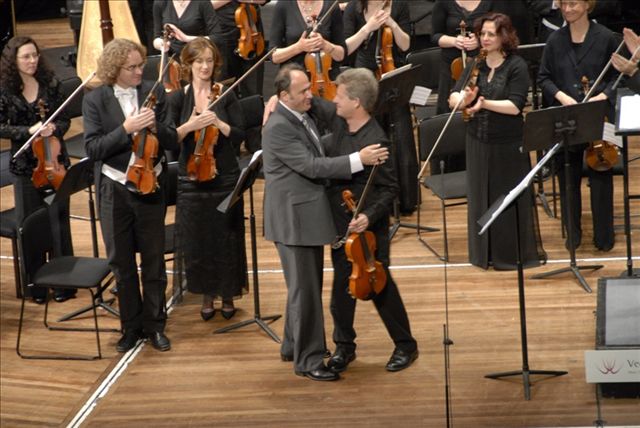
After performance of Requiem
After performance of Requiem
After performance of Requiem
Requiem “The Holocaust” is not music for the faint of heart. The listener is drawn inexorably into the unfolding tragedy... Pigovat runs a stylistic gamut from tonal to expressionistic with hints of Berg and Shostakovich as he gradually unfolds his nightmare. Though instrumental throughout, there are times one can hear “Re—qui-em” among the many busy layers of musical texture. READ MORE
Dwight Pounds
Journal of the American Viola Society
2011
The Music is harrowing and tense, and very Russian in sound. Echoes of contemporary composers such as Denisov, Kanchelli and Gubaidulina can be heard, as well as the inexorable thread of Shostakovich in the Dies Irae, but the voice of the composer remains highly individual. Balancing the violence, anger and tension is the conciliatory beauty of the Lux Eterna that rounds out a work of deeply felt power. READ MORE
John Button
The Dominion Post
November 11, 2008
Using purely orchestral forces this 46-minute symphonic-concerto encompasses ear-splitting anguish, horror and confusion -- tolling tintinnabulations mark the outset of unspeakable atrocities while abject grief is heightened by sonorous lamentations of the solo viola; a role of unusually formidable demands. READ MORE
Howard Smith
M&V Daily, Concert Reviews
November 13, 2008
Pigovat's music is evocative and distuibing in its depiction of the Holocaust. With styles reminiscent of other Russian composers, including the rich melancholy of Shostakovich the
compositional style is still distinctly Pigovat's own.
Intense and strongly assured it is a life-affirming piece that makes a telling statemen with subtlety. READ MORE
Picc, Fl, Ob, Bsn, P.Cl, 3 Cls, B.Cl, A.Sx, T.Sx, B.Sx, 4 Hns, 2 Cnts, 3 Tpts, 3 Tbns, Bar, 2 Tbas, Str. Bass, Timp, Perc (4).
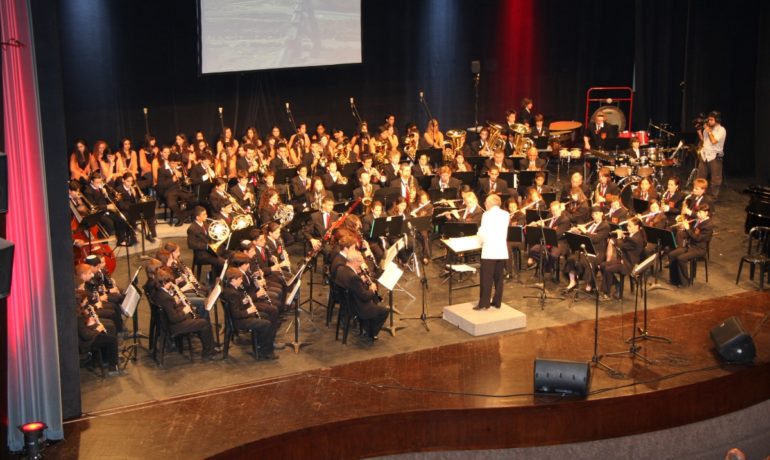
In 1996 I met Michael Delman, the conductor of the Wind Orchestra of the Petah-Tikva Conservatoire (Israel). Before meeting him for the first time, I had never written anything for wind orchestra, and I have viewed wind orchestration as limited to bands performing marches or any entertainment music, like songs, waltzes, polka, fantasy, and potpourri. Mr. Delman opened a new world to me: the wind orchestra, with abilities and repertoire similar to the symphony orchestra. This type of orchestra is called a symphonic wind band or a wind symphony orchestra.
For more than 20 years, Michael Delman and I have collaborated. He and his orchestra premiered most of my compositions written for symphonic wind band. Mr. Delman himself conceived the theme of some of my wind band compositions, includingMassada, Wind Of Yemen, Exile, and The Heroic Song.
Massada was the first piece that I composed for symphonic wind band. It was composed, and also performed for the first time, in 1997.
Massada (or Masada) is a fortress near the Dead Sea, whose defenders resisted the Romans for seven years and then committed suicide rather than being captured and enslaved by the Romans.
In 1999, Michael Delman and the Petah-Tikva Conservatoire Wind Orchestra performed the European premiere of Massada in the wind-orchestra competition in Zurich, Switzerland, where they won first prize in their category. They also performed Massada in Festival Mid-Europe ’99 in Schladming, Austria.
Since then, Massada has been performed by various orchestras in Europe, the United States, and in South America, and several orchestras have recorded it.
Picc (=Fl 1), 2 Fls, A.Fl (= Fl 2).Obs, Bsns, 3 Cls, B. Cl, 2 A. Sxs, T. Sx, B. Sx, 4 Hns, 5 Tpts , 3 Tbns, Bar, 2 Tbas, Str. Bass, Perc (6)
In 2005, I composed Song of the Seafor the conductor and director of the Bands and Symphony Orchestra at Murray State University in Murray, Kentucky: Dennis L. Johnson. I composed the Song of the Sea for Dennis Johnson in 2005.
This is what he said about the piece:
Boris Pigovat is a bright, fresh voice in the world of wind band composition. His “Song of the Sea” is an original tone poem written for myself and the Murray State University Symphonic Wind Ensemble and was premiered in a special performance in Carnegie Hall on March 29 of 2005. This dramatic work captures the beauty and majesty of the open sea as well as its darker and more ominous mood during a ferocious storm. The work carries the listener on a journey through calm and tempest and ends with a grandiose climax that rivals any of the great programmatic composers of this or any era. The wind ensemble and I thoroughly enjoyed the preparation and performance of this masterful work as did the exhilarated crowd in Carnegie Hall that called us back three times. “Song of the Sea” deserves to be on all collegiate and (technically proficient) high school band programs throughout the world. It is a masterpiece for wind band.
3 Fls (Picc), 2 Obs (E.Hn), 3 Cls (B.Cl), 2 Bsns, 4 Hns, 3 Tpts, 3 Tbns, Tuba, Timp, Perc (4), Cel, Hp, Str.
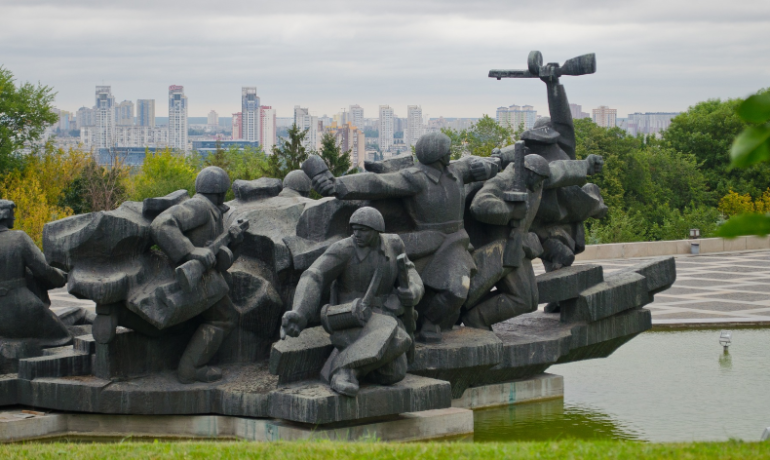
The Memorial symphony is dedicated to the victims of World War II, a theme that touched me personally.
I was very excited for the composition’s premiere to be performed by the USSR Symphony Cinema Orchestra, in 1988, in Moscow. For a young composer, this was an amazing opportunity. Plus, this was the first time that I heard the symphony performed live, and it was also recorded — by the best orchestra I could have wished for at that time.
Below, is the live recording of the premiere. The recording is old, and there are some background noises, so please accept my apology for that.
Picc, Fl, Ob, Bsn, P.Cl, 3 Cls, A.Cl, B.Cl, A.Sx, T.Sx, B.Sx, 4 Hns, 3 Cnts, 2 Tpts, 3 Tbns, Bar, Tba, Str. Bass, Timp, Perc (4-5)
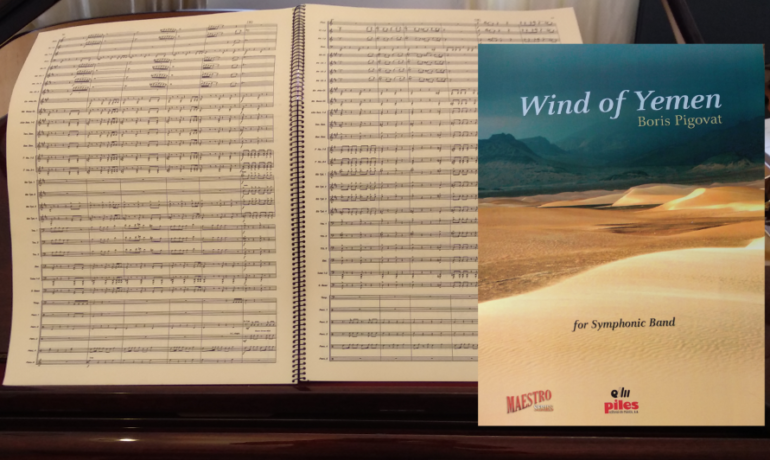
The symphonic poem Wind of Yemen for Symphonic Wind Band (2000) is based on the traditional tunes and dance melodies which were preserved during the centuries by a very closed society of Yemenite Jews. The work comprises two connected movements. The first movement depicts a Yemenite desert landscape. The second movement depicts the Yemenite folk celebration.
The concept was suggested to me byMichael Delman. The task was very challenging for me, this was my first introduction to Yemenite Jewish folklore.
If you need to compose a piece for folklore that is completely foreign to you, first you must “sink” into it. Only when you feel that you own the style, like it is in your blood beneath the skin, are you ready to compose…
Following that advice, I spent almost three months listening to a massive quantity of audio recordings from Yemenite Jewish folk music, until I was able to internalize the unique feel of its melodic and rhythmic patterns.
In 2000, I completed the Wind of Yemen, and it was premiered by Michael Delman and the Petach-Tikva Conservatoire Symphonic Band.
I thought that several other of the performances
were also very good, but here is
where specific works stand out in my mind
as being significant. Boris Pigovat’s Wind of
Yemen performed by the Symphonic Band
of Centre Artístic Musical de Bétera was
marvelous... READ MORE
Joe H. Brashier
WASBE Conference
2009
I also enjoyed The Winds of Yemen by Boris Pigovat, with its evocative ethnic music. He has a superb website with details of his music, including the Song of the Sea, premiered in Carnegie hall by Murray State University Wind Ensemble conducted by Dennis Johnson. As I reported in a recent homepage, this work was a great success in its recent German premiere, conducted by Michael Kumnmer, and I have no doubt that The Winds of Yemen will join it as a fine example of this composer's music. READ MORE